
BLOGS > JANUARY 31, 2023
BY JOHN ALLUM
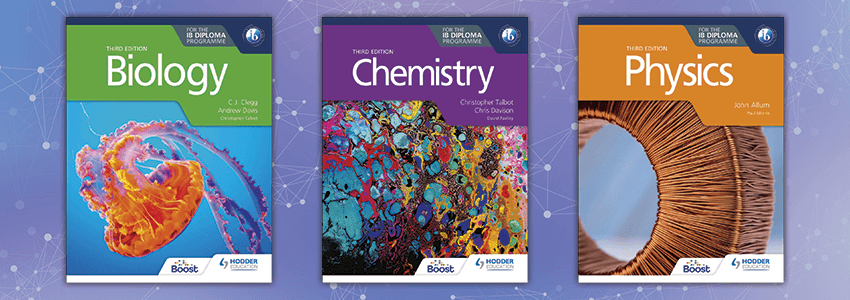
Trust experienced and best-selling authors to navigate the new syllabuses confidently with these coursebooks that implement inquiry-based and conceptually-focused teaching and learning.
Developed in cooperation with the International Baccalaureate (IB)
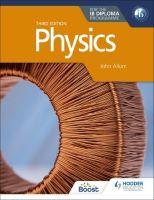
The new IB Physics Guide is much more diverse than previously, providing students and teachers with many opportunities for variety, expanding beyond the limitations of just pure physics. Many more changes were needed for this new edition, compared with the last revision, and it has taken more than 18 months to produce. The principal aim has been to provide greater interest and variety into the course and the book, stressing cross-topic links, common themes and a greater variety of learning techniques. Theory of Knowledge (TOK) and Nature of Science (NoS) have retained their rightful prominence. However, amid all the variety, I believe that it is of vital importance that students can readily identify the most important knowledge that they need to take with them into the examination room. This has been achieved through the use of the prominent Key Information feature, to be found, where it is relevant, on most pages throughout the book.
The removal of the options and some of the more challenging concepts will disappoint some, but has surely made the course more manageable and accessible.
The book is necessarily a very close match to the IB Physics Guide. This is highlighted by the quotes from the syllabus and the data booklet found throughout. In writing the book, I needed to be constantly aware that the syllabus order (and the order of the book) is not necessarily the same as the teaching order. However, the book is written in such a way that there is a logical progression of ideas, so that it can be the teaching order, if required.
Students taking the course have a very wide range of competence in English language, and also in their prior knowledge of physics. Learning terminology is certainly an essential part of any science course but, wherever possible, complex English has been avoided. Physics examples have been taken from around the world.
The online glossary is longer and more detailed than might be normally expected, and it is intended not only as a source of reference, but also as a revision aid.
The coursebook needs to be suitable for students starting the IB course with different levels of physics knowledge, including some for whom this is their first course in the subject. Topics start from first principles and make few, if any, assumptions about the physics backgrounds of the readers. However, at the same time, introductory topics are treated quickly and should provide reassuring support for those who have studied the basics of physics before.
I know from many years of experience as an IB examiner that the level of mathematics required in the IB physics examination is not usually a problem for most students. However, the use of mathematics only becomes relevant after the student has identified and applied the relevant physics. So, students need plenty of practice at answering questions (including those which require qualitative answers). Hence, the very large number of worked examples and self-assessment questions which are a significant feature of the book. Preparing these has been a major task in the preparation of the book, so, I very much hope that these will be a valuable resource for students and teachers.
The required integration of tools and inquiry process into the book has provided challenges because, if each point was to be introduced where it first becomes relevant, the early chapters would be overloaded, whereas the later chapters would have very few, but I think we have the balance right. I hope you like these new features.

John Allum
John Allum taught physics to pre-university level students in international schools for more than 30 years (as a head of department). He has now retired from teaching, but lives a busy life in a mountainside village in Southeast Asia. He has also been an IB examiner for many years.
Search, Curate, and Order Smarter: Titlewave 101 for Public Libraries
September 4, 2026
Grid ordering, EDI, curated lists, and street date delivery – how public libraries put the free Titlewave platform to work every week.
Read more
Six Fall Releases Patrons Are Asking For
September 3, 2026
Up to 25% off if preordered during the sale period.
Read more
Getting Started with Titlewave for NYC School Libraries
September 2, 2026
Building and maintaining your ideal library collection is easier than ever with Follett Content, an approved vendor for New York City (NYC) school libraries. Yes, Titlewave® helps simplify book ordering in FAMIS, but our goal goes beyond placing orders. We...
Read more
Enter the FlutterBee Fall Book Giveaway from Follett Content!
September 1, 2026
Enter the FlutterBee Fall Book Giveaway for a chance to win one of three seasonal book bundles curated for young readers – 15 titles selected to generate excitement and increase engagement this fall.
Read more
The #BritReads26 Bookshelf – September 2026
September 1, 2026
If you follow Britten Follett on social media, you may already be tracking her #BritReads26 journey – a personal commitment to reading and sharing the books that are moving, surprising, and staying with her. Here’s her latest roundup, straight from...
Read more
5 Ways to Refresh Your School Library Collection
August 21, 2026
Before students return for a new school year, many librarians focus on weeding shelves and ordering new books. But a truly effective collection refresh starts with understanding what your data, circulation trends, and community needs are telling you.During a recent...
Read more