
BLOGS > MARCH 31, 2020
BY BETSY POTASH
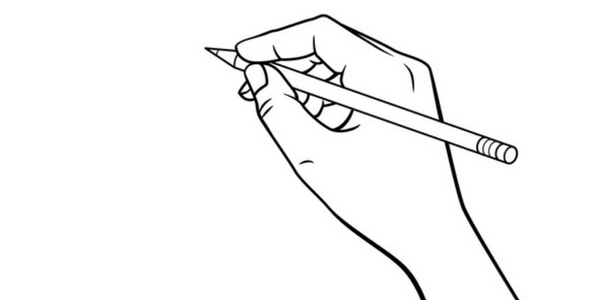
Few people would argue that taking notes is one of the great joys of being a student. Taking good notes can be a huge asset in academic life, yet it’s generally viewed as a tedious process, perfected by a few students while the rest scrape along as best they can.
Personally, I feel the same way about lectures. At times it might be necessary, but give me a project, mock trial, lab, collaborative artistic production, poetry slam or just about anything else and I’ll be much happier as a teacher.
Yet sometimes kids need to listen while experts share information, whether it comes in the form of a lecture, podcast or a video. And if they hope to remember any of that information, well, notes will be necessary for students.
Enter sketchnotes -- the magical twist on listening that takes it from passive to active.
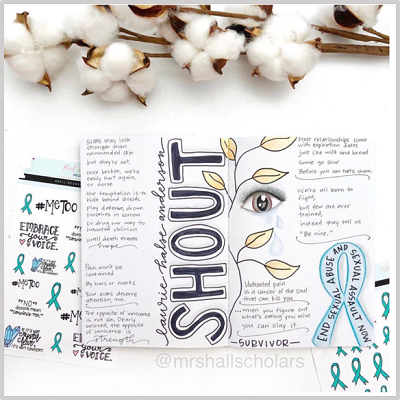
Years ago, a designer named Mike Rohde sat in lecture after lecture, filling up thick notebooks with careful, perfect notes. He was so good at it. He hated it.
Then, overnight he had an epiphany. What if instead of writing down everything he heard so he could go back over everything again later (if he ever actually wanted to), he did the work of processing as he listened, only capturing the big ideas that really mattered in his notes?
Suddenly, he began to enjoy the process of listening, learning and capturing the knowledge he was gaining on paper. He had time to embellish the ideas, connect big thoughts, brighten letters and words with artistry, add icons, symbols, or pictures here and there. Suddenly, he enjoyed taking notes. Suddenly, they were fun to look at. Suddenly, big ideas stood out.
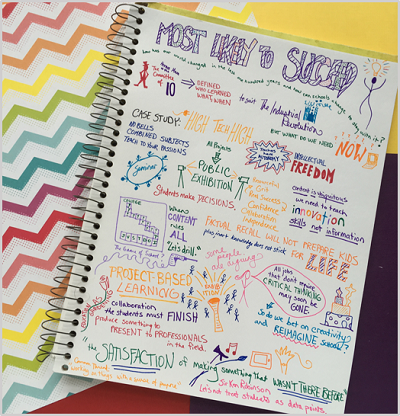
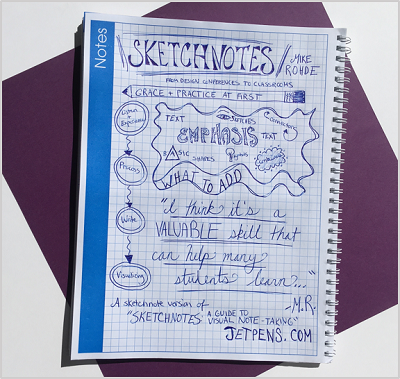
Since Mike’s notes went from dull to dynamic, his vision for sketchnoting has spread across the world, from design conferences to classrooms. Just search the sketchnotes hashtag on any social media platform to see all the ways this medium is used.
But why does it work? Why do sketchnotes make taking notes fun at the same time they make information more memorable? Well, it helps us remember things when our work taps into the two different ways we process things – the visual AND the verbal. So often the work of schools trends towards writing and speaking, with visual representations of ideas relegated to textbook illustrations or the occasional timeline. Sketchnotes help students tap into both sides of their brain, and that process makes it easier to remember information.
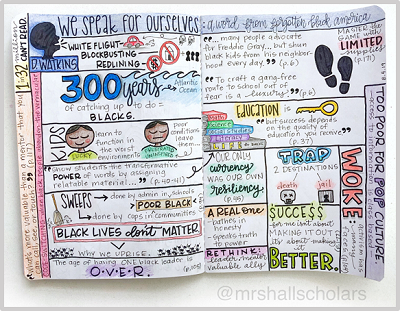
So how can you get started with sketchnotes? You might want to show your students a visual explanation to get rolling. Mike’s got a great mini-workshop on YouTube if you’ve got the time, or you could opt for this quick and lovely introduction to visual notetaking from Sketcho Frenzy.
From there, you might want to comfort your art-fearing students that the big goal of sketchnotes is to capture “ideas, not art,” as Mike often reminds people. Though their sketchnotes may end up becoming complex and artistic in the end, that’s not required. The initial goal is for students to get important ideas down onto the page in a way that’s memorable, rather than simply writing everything they hear verbatim in bullet pointed lists.
It might also be helpful to give students a few ideas for what can go in their sketchnotes.
For example:
You could also pick out some fun examples to show from Mike Rohde’s Flickr account overflowing with sketchnotes of lectures, but also of restaurants, sermons, coffee shops, biking trips and more.
OK, so let’s assume you’ve introduced your students to sketchnotes with a video, some examples and a little background on how sketchnotes can help them learn and remember information effectively. They’re excited to get started. Now what?
There are SO many ways you can incorporate this strategy into your lessons.
Here are ten:
1. Give a short lecture and invite students to sketchnote as they listen. Then do a gallery walk so they can see what other people thought were the big ideas from the lecture.
2. While sharing key information with students, sketchnote your own lecture on the board, so students see how you process the ideas visually.
3. Play a TED Talk, documentary or podcast in class, and make the companion assignment a set of sketchnotes showcasing the main ideas.
4. As students conduct research, ask them to create sketchnote notecards for each source.
5. Ask students to create a sketchnotes review page for themselves before a major test, then do a gallery study walk, in which everyone has time to read through and examine the visuals for each other’s impressions of the most important ideas from the unit.
6. Have an official class sketchnoter for each discussion and put them up in an Instagram-feed style bulletin board that everyone can see. Absent students can catch up, and someone in class can step up to review main ideas from the previous discussion via the sketchnotes before the next discussion.
7. Start a class Instagram that features the main concepts of your course, sharing highlight sketchnotes throughout the year for an intended audience of other students around the world who might appreciate visual help with understanding the course concepts.
8. Have your students create a video showing how to sketchnote and why it’s worthwhile and share it with teachers throughout the school. Then have the entire school create sketchnotes for a guest speaker at an assembly and put them up in the halls around the school.
9. Give options in differentiated final projects to create sketchnoted versions of the unit material.
10. Use your students’ growing familiarity with sketchnotes to segue easily into one-pager assignments.
However you decide to incorporate sketchnotes into your course, you’ll be giving visual students a tool they can use for life, and helping verbal learners expand their options and get more comfortable with their visual side. With sketchnotes, EVERYONE will have the chance to make their listening more active and their learning more memorable.

BETSY POTASH
Betsy’s passion is helping English teachers build innovative and creative lessons. Get inspired and follow along with her at Spark Creativity.
5 Ways to Refresh Your School Library Collection
August 21, 2026
Before students return for a new school year, many librarians focus on weeding shelves and ordering new books. But a truly effective collection refresh starts with understanding what your data, circulation trends, and community needs are telling you.During a recent...
Read more
An Author Interview with Bao Phi
August 21, 2026
From the Caldecott Honor-winning creators of A Different Pond comes a new picture book that encompasses three generations, two languages, and one universal experience. Receiving a starred review from Publishers Weekly, Ride/Dap Xe is a bilingual story in English and Vietnamese that explores...
Read more
Fall Library Planning Checklist for NYC Schools
August 14, 2026
The era of the “budget dance” is over for New York City’s school libraries thanks to the newly established baseline budget, giving librarians and media specialists greater budgetary confidence when planning collections. This summer, take advantage of this stability to...
Read more
An Author Interview with Ha Dinh
July 28, 2026
Ly-Lan Finds a Way is an illustrated early chapter book series for children ages 6-10 written by Vietnamese American author Hà Dinh. Through warm, relatable stories rooted in school life, family, and friendship, the series explores themes of resilience, empathy,...
Read more
July 17, 2026
Public libraries have spent the past year navigating a book vendor market in motion. If your library has been searching for a public library book vendor with real staying power – one whose ordering technology actually fits how your team...
Read more
Powering Summer Reading Through Partnership and Purpose
July 9, 2026
That’s the impact of this year’s Book Up Summer program, an annual literacy initiative led by Washington-based nonprofit Page Ahead that helps low-income students choose and take home books for summer reading.For the fifth consecutive year, Follett Content supported the...
Read more