
BLOGS > SEPTEMBER 19, 2024
BY DR. KATHRYN HOVING

At the end of the 2023-2024 school year, my sophomore English classes were just finishing up a round of book clubs. When asked what they enjoyed most about the experience, Matthew expressed, “I haven’t fully read a book in three years, and I actually finished this one and enjoyed it.” In fact, Matthew finished his book about four weeks into the six-week book club.
How does one go from barely reading for several years to finishing a whole book in a mere four weeks? I truly believe that a combination of high-quality, relatable books alongside engaged peers can make a world of difference.
While completing my dissertation study, my goal was to determine how to motivate reluctant and struggling readers. What I discovered was that the following five elements could help develop that reading motivation: choice, relevance, interest, success, and peer interactions (or as I affectionately call it, “CRISP”). Since book clubs incorporate all these elements, I collected data while my students participated in book club discussions and through interviews. What I discovered was that all five elements of CRISP can and will positively impact reading motivation; however, all students are different and will be motivated differently by each element. For example, one student may really enjoy the peer interactions while another student may be motivated more by being able to choose the book or by getting to read a book that is relevant to their lives.
To implement book clubs involving all five elements of CRISP, I have tried many strategies over the years. Here are some of my favorites:
1. Choices – Provide students with several choices of books from various genres. I usually choose books around a theme we are studying. For instance, one theme we study with tenth graders is “Taking a Stand,” so I have offered the following novel options depending on the academic level and reading levels of the students I have each year:
Students are then placed into groups based on their top choices. I try my absolute best to give them their #1 choice, but it all depends on how many copies of books I have, how many students I want to be in a group, and who may or may not work well together. To shop the books above, check out this Titlewave® list.
2. Various Formats – To ensure students can successfully read the books, I try to provide different formats. I have some students who choose to read their book with their ears; the quality of audiobooks has really come a long way! I offer graphic novels, verse novels, and short stories, too. Given how visual our learners are in 2024, these formats can be quite appealing, especially to our most reluctant and struggling readers.
3. Training – As teachers, when we are required to try something new in our schools or classrooms, the hope is that we are properly trained and have had the opportunity to experience the new curriculum or activities first. Why would we not do the same for our students? Before my students complete any reading of their book club novels or have any discussions, they participate in four rounds of training. During this training, they have opportunities to meet with their book club groups and discuss images, articles, and videos of book clubs in action. More importantly, they are asked to reflect on what their group did well, what their group could improve, what aided the discussions, and what could have helped make the discussions stronger.
4. Group Size and Length of Clubs – A book club group that has anywhere from three to six members seems to be ideal. Two is too small – though I have done it before – especially if someone is absent on the discussion date. More than five or six students and the groups tend to either get distracted easily or end up having more side conversations. I have students with the same book and group for six weeks most often. In the past, I have divided each book’s pages by six weeks to determine how many pages the students need to read each week. I then go through the books and find decent stopping points around that page requirement so students do not have to stop reading in the middle of a sentence or detailed section.
5. Notes – I have tried many different variations of notes over the years. I began using Harvey Daniel’s literature circle roles, but I found that this led to very surface-level discussions. Most recently, I have had my students write down two open-ended questions they can ask about their book each week in addition to two quotes that stood out to them. They also have a third task that depends on the curriculum, such as finding examples of figurative language or explaining how the characters help develop the theme. This is what they do for their first book clubs of the year to get a better understanding of what aids a discussion. For the second round of book clubs, I often ask my students to complete a one-pager. Their goal is to fill the page with anything they would like to discuss in their groups. Each week, I share the best ones in a hall of fame!
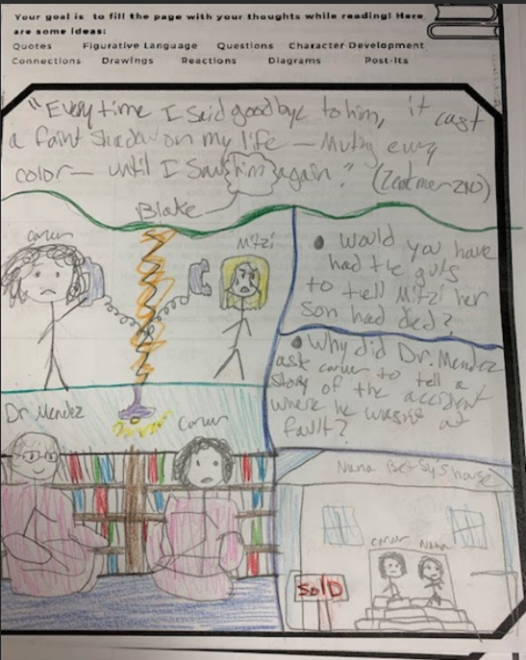
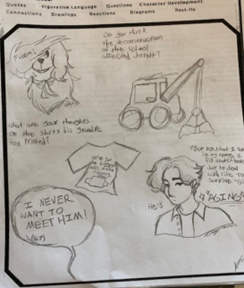
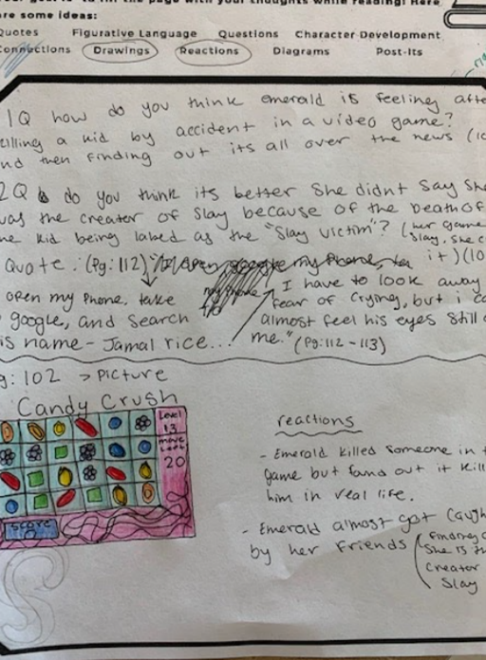
6. Ice Breakers – Before my students begin their discussion on Fridays, I have them start by discussing 2-3 icebreaker questions. This provides students a chance to talk about topics that are more lighthearted before opening the discussion to subjects that are more academic and possibly serious.
7. Question Cards – There will almost always be some groups that have a harder time keeping the discussion going. If I notice this occurring, I will often walk by their group, place a ring of generic novel questions on their table, and walk away. This still puts the leadership in the groups’ hands while allowing the conversation to continue with little effort.
8. Expand Opportunities Through Virtual Book Clubs – Unfortunately, curricular demands may prevent teachers from incorporating book clubs into a typical classroom. However, students can still participate by hosting a virtual book club. My high school has a once-a-month virtual book club by combining students from all three high schools in the district. Feel free to even channel literacy giants Penny Kittle and Kelly Gallagher by hosting a book club with a class from another school.
It’s a known fact that teachers can try to teach the exact same thing every year, but this will never happen successfully because we always have a new group of students in front of us with different needs and interests than the students from the year before. Therefore, I keep reflecting on the success of book clubs and keep adapting to best meet the needs of each year’s students. It may not be perfect, but it may just lead to an adverse reader like Matthew suddenly becoming an enthusiastic reader!
About the Author: Dr. Katie Hoving
Reading and English Teacher, Hampshire High School, Illinois

Dr. Katie Hoving has been a high school teacher for 17 years. She taught special education for 10 years with a focus on teaching Reading and English. She earned her master’s degree in Literacy from Judson University in 2009. Six years ago, she made the switch to teaching general education ELA, which allowed her to continue teaching kids who struggle but on a grander scale – and still have time for her family and for furthering her education. She completed her Reading Specialist endorsement in 2018, and she graduated with her doctorate in Literacy in May 2022! Her research interests include motivating struggling learners, determining strategies for affective literacy, and keeping up with YA Literature trends. Katie developed a framework for motivating readers who struggle, which calls for providing choice, relevance, interest, success, and peer interactions (CRISP) to teens in the classroom.
Do you need help with resources to engage your striving readers? The Follett Content team can help!
What's a street date program for public libraries, and why does it matter?
May 4, 2026
If you manage adult collections at a public library, you already know the pressure that builds before a highly anticipated book comes out. Holds lists grow long. Patrons ask at the desk. And when release day finally arrives, the copies...
Read more
Follett Content is Back as an Approved Vendor for NYC School Libraries
March 23, 2026
New York City (NYC) school libraries operate at scale and benefit from partners who do the same. Follett Content is once again an approved vendor (#ECO004000), offering support that simplifies ordering while maintaining consistency, including:Local, on-site support with experience assisting school...
Read more
Why Home Libraries Matter: How Books at Home Improve Student Reading Achievement
March 4, 2026
Reading growth doesn’t only happen during the school day. One of the most effective, research-backed ways to support literacy is ensuring students have consistent access to books at home. When students can read outside the classroom – during evenings, weekends, and...
Read more
How to Supercharge Your Summer Reading Program
February 23, 2026
For years, Follett Content has been a leading supplier of books for school libraries and classrooms. With our rich tradition of outstanding service, we’ve fully embraced the opportunity to serve public libraries and are forging ahead by providing essential resources...
Read more
2026 ALA Youth Media Award Winners: Find the Best Children's & YA Books of the Year
January 26, 2026
On their 150th anniversary, the American Library Association (ALA) revealed the ALA YMA 2026 winners and honorees on January 26, 2026, honoring the year’s most exceptional books and media for children and teens. Recognized globally for their impact and excellence, the...
Read more
An Author Interview with Jennie Wood
January 9, 2026
From non-binary author Jennie Wood, creator of the acclaimed graphic novel series Flutter, comes I Didn't Ask For This, which follows a group of kids who share one thing in common: their parents are social media influencers who’ve shared their...
Read more