
BLOGS > OCTOBER 24, 2019
BY BETSY POTASH
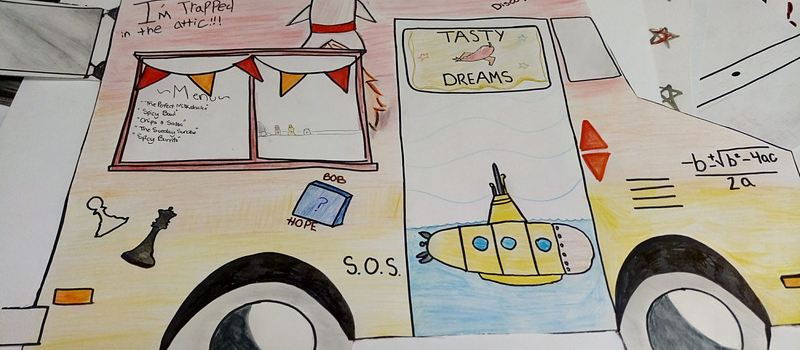
Sometimes all it takes to reach a student is a little boost of engagement. While engagement doesn’t automatically mean there’s depth or complexity, I think we can all agree that engagement is the first step. After all, if a student won’t engage at all, how can a teacher lead them toward, well, anything?
Sarah Fine and Jal Mehta argue as much in the beginning of their recent book, In Search of Deeper Learning, and I couldn’t agree more.
Sometimes creative projects get written off as too easy, not rigorous enough, or just part of a song and dance created to keep students entertained.
But that’s just not the case. Consider the shift in the modern workplace Fine and Mehta present: “In 1970, the top three skills employers asked for were reading, writing, and arithmetic; in 2015, they are complex problem-solving, critical thinking, and creativity” (11). Creative projects give students the chance to work on 21st-century skills, as they will eventually need to do in their future jobs that may not even exist yet.
The key when it comes to creative projects is to make sure that the intention behind the work is clear, that the critical thinking students do in creating their projects clearly connects to the standards or other benchmarks of the classroom.
One creative project that helps connect literature with the modern world and heighten student engagement is the literary food truck festival. Launching one of your own is not as hard as it may sound.
A literary food truck festival works well as a wrap-up for literature circles, a choice reading unit, or a term’s worth of reading you’d like to review with your students. Let partners or small groups create food trucks based on novels. All their truck choices – name, appearance, menu, staff, social media, political leanings, charitable connections, etc. – need to relate directly back to the themes, characters, setting and ideas from their novels.
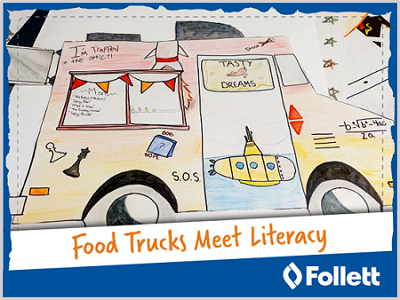
For example, imagine a group is creating a food truck based on The Hunger Games. Is it a rebel truck from the outer districts, careening through District 1 to incite dissidence? In which case, what’s on the menu, who is working in the truck and what’s the name of the business? And how does that all connect to the novel? It’s easy to build plenty of critical thinking into this project, while also inspiring student interest and building up to a final event students look forward to, the presentation of the food truck projects, perhaps with some real food to go with them.
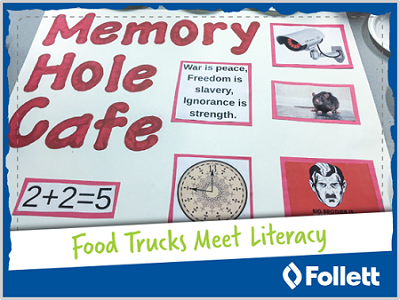
Are you ready? Let’s dive into how to make it happen.
Step One: Rollout
Explain the project. You can sign up for a free full curriculum set on the Spark Creativity website to help you with this. You can’t be too clear about how important it is for students to connect all of their choices to their text and not spend all their time at the store picking out food for their final presentations.
Step Two: Workshop
Let students work in partners or in groups to brainstorm their food truck ideas, constantly looking back into their texts to connect their choices with their reading. They can design their trucks out of maker materials or digitally. Wander around, checking in with each group to answer questions and keep them on the right track.
Step Three: Festival Planning
Choose the day of the final festival with your students. Consider having it at lunch and inviting guests. You might want to work with student volunteers on things like posters, a press release for the school newspaper, music and some welcome signs for visitors. Remind them repeatedly about what they need for the big day and when it is as everyone finishes up their work. You might want to share some recipe sites like Pinch of Yum or Smitten Kitchen to help students get recipe ideas for their trucks.
Step Four: The Big Day
Don’t forget your camera (and your appetite) on the day of the festival. Have students take turns hosting at their trucks and walking around to see and enjoy others’ work. It’s a good idea to have some kind of feedback mechanism built in for students – a way they can compliment the work of others and be accountable to making connections between the trucks and the novels. The built-in “meal ticket” activity in the food truck curriculum set is an example of this.
I think you’re ready! While this project might turn a few heads at your school, anyone who comes up close will see that your students are thinking critically about their books AND enjoying the process. Plus, when was the last time anyone plagiarized a literary food truck? Using original creative projects eliminates cheating as an option, and that’s never a bad thing.

BETSY POTASH
Betsy’s passion is helping English teachers build innovative and creative lessons. Get inspired and follow along with her at Spark Creativity.
Why Students Stop Reading for Pleasure and What Schools Can Do About It
October 7, 2026
Most children enter school eager to explore stories, characters, and new ideas through books. Yet as students get older, many begin reading less frequently for enjoyment.According to data from the National Assessment of Educational Progress (NAEP), the percentage of 13-year-olds...
Read more
October 2, 2026
Sometimes, a community exceeds every expectation.When Follett Content began planning its 2026 book sales, the goal was ambitious: Raise $15,000 to support United Way of Greater McHenry County’s Dolly Parton’s Imagination Library Program. By the end of the fundraising effort, that...
Read more
Bilingual STEAM Books Your Youngest Learners Will Love
October 2, 2026
National STEAM Day Book GiveawayIn celebration of National STEAM Day, we're excited to partner with Charlesbridge on a special STEAMWORKS giveaway for educators and public librarians. Ten lucky winners will receive a collection of STEAMWORKS picture and board books to...
Read more
Stock Your Shelves with the Best Fall Books for Classrooms and Libraries
October 1, 2026
Enter the FlutterBee Fall Book Giveaway for a chance to win one of three seasonal book bundles curated for young readers – 15 titles selected to generate excitement and increase engagement this fall.
Read more
PreK-2: A Foundational Skills Checklist for Teachers and Administrators
September 30, 2026
The skills that decide whether a student reads on grade level in third grade get built long before third grade. Here’s what to look for across PreK, Kindergarten, and Grades 1-2 – and what it takes to build the classroom...
Read more
Building a Multilingual School Library Collection in NYC
September 24, 2026
New York City Public Schools bring together a wide range of languages, cultures, and experiences thanks to the diverse communities they serve. A multilingual collection reflects that diversity, gives students opportunities to learn in the languages they know best, and...
Read more