
BLOGS > JULY 23, 2020
BY JILLIAN HEISE
Nonfiction can be tricky for #ClassroomBookADay read-alouds. Much expository nonfiction is lengthier text which is too long to read in one short read-aloud sitting. An expository nonfiction book like Pink is for Blobfish by Jess Keating would take way more than ten minutes to read aloud, but since it is set up as a series of two-page spreads about different animals, I can choose one, two, or three of them to share during the read-aloud, and then keep it available in the classroom or library for students to go back to it who want to read more on their own.
Most often, nonfiction is pulled into #ClassroomBookADay read-alouds through narrative nonfiction forms – biographies or historical stories. But as prolific nonfiction author Melissa Stewart often reminds me, many students are more engaged with and drawn to expository nonfiction, yet it is often left out of classroom read-aloud selections when the purpose is enjoyment. For some kids, what they most enjoy is learning new things and expository nonfiction is the place to do that. Melissa has a foundational blog post about the types of nonfiction on her blog. It helped me to see the various types of nonfiction: narrative, expository, and beyond, within the context of the choices I am making for my read-alouds. It helps me keep an eye on ensuring a mix of narrative and expository nonfiction for my #ClassroomBookADay choices.
There is an additional category I recently learned about when discussing Unicorns 101 by Cale Atkinson. I was fascinated by how the book is completely fictionalized (it is narrated by talking unicorns!), but it is structured like an instruction manual or textbook, which is an expository nonfiction format. I was calling it fictionalized nonfiction, but Melissa (my nonfiction guru!) shared with me that there is a category referred to as expository fiction, which is exactly what fits that book and some on my list below. I appreciated this additional perspective because it allows me to focus on the structure of a text, meeting the goal of some standards, beyond just fiction or nonfiction – a hybrid that shows students an example of informational structures being important in various contexts. Helping to expose students to the variety of types of nonfiction can help them to see informational text in a different way, which can lead to more engagement as they find the type that best works for them.
One of the best resources in nonfiction picture books is the paired text that is held within – the back matter. Those pages in the back of the book that include additional information should never be overlooked! Nonfiction picture books often contain the main text or narrative, plus rich information in the back. That might include further depth of information about the topic, author or illustrator notes (explaining the thinking behind the creation of the text), timelines, explanations and more. Depending on what kind of information is provided in the back matter, I may choose to share it at a different time when revisiting the book, or I might choose to read an author’s note directly following the C read-aloud. No matter which way I choose to go, I always show and point out the kind of back matter available after I read the book aloud so my students become familiar with back matter as a resource and know to look for it on their own when reading nonfiction books.
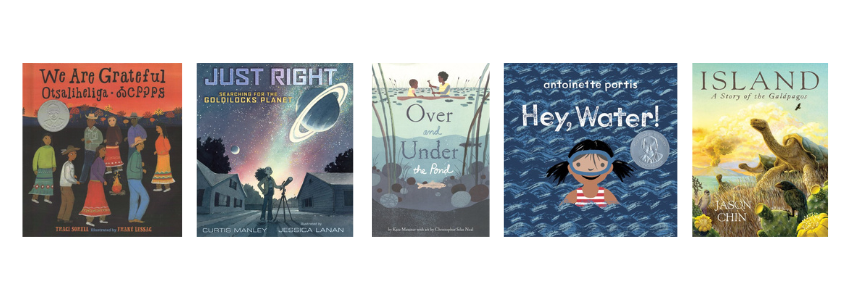
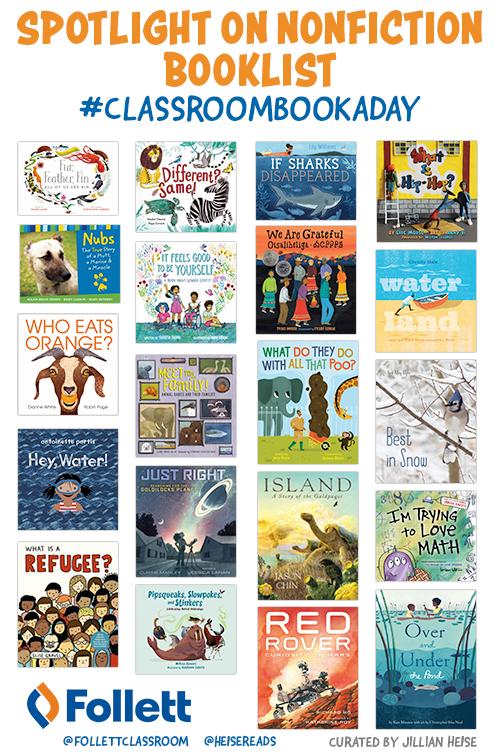
Melissa has been a constant reminder for me to push myself to branch out into the world of nonfiction, especially expository nonfiction. It is something I have to do intentionally because it is a gap for me – I tend to gravitate toward fiction or narrative first. This is a valuable thing to think about in relation to #ClassroomBookADay read-aloud choices. How are your own preferences affecting the balance of picture books you choose for your daily read-alouds? Many teachers have chosen to do a “Nonfiction Friday” focus to ensure they are incorporating more nonfiction selections into their daily reads. Whichever way you choose to critically assess the book choices you are making, I encourage you to be sure to include some of the great quality nonfiction picture books available today. This list of 20 of my favorite recent nonfiction titles is a great place to start!
Read all Jillian Heise #ClassroomBookADay articles on Follett Learning.
Watch webinar recording presented by Jillian Heise, Building Community: #ClassroomBookADay Read Alouds.
Jillian Heise
Jillian Heise is a Grade K-5 Library Media Teacher in southeastern Wisconsin. She previously taught Grades 7-8 ELA in the Milwaukee area for 11 years and is board certified. Jillian is a passionate advocate for student choice in reading and the power of shared stories through #ClassroomBookADay picture book read-alouds. She brings her literacy expertise and knowledge of books to her role as Chair of the WSRA Children’s Literature Committee. You can find Jillian talking books and education at Heise Reads & Recommends and on Twitter at @heisereads.
An Author Interview with Drew Daywalt
June 27, 2025
Drew Daywalt, award-winning author of the best-selling The Day the Crayons Quit series, is about to release his second middle grade book with illustrator Mike Lowery, No Sam! and the Meow of Deception. The title continues the hilarious adventures of Sam...
Read more
An Author Interview with Adam Wallenta and Makana Wallenta
June 27, 2025
Get ready to rock the galaxy with the first volume of Punk Taco – a wildly imaginative, music-fueled sci-fi adventure from father-son duo Adam and Makana Wallenta. Created when Makana was just five years old, this award-winning graphic novel now debuts...
Read more
An Author Interview with Lisa Manuzak Wiley
June 27, 2025
A bewitching new graphic novel series is arriving this fall!Author-illustrator Lisa Manuzak Wiley, who grew up in Hawaii, blends cozy fantasy, sisterhood, and tropical charm in a heartfelt homage to her roots: The Witches of Pepperwood Bay Vol. 1. Lisa...
Read more
What We're Reading – Books to Add to Your TBR List
June 4, 2025
As a Follett Content Outside Sales Consultant, I’m not only an avid reader, but also a passionate book reviewer! I’ve curated my top 10 book picks that are perfect for adding to your To Be Read (TBR) list. These titles...
Read more
Author Joseph Koszary on the Changes Made to the International Baccalaureate Extended Essay
May 22, 2025
As someone who’s served as an extended essay coordinator, examiner, and supervisor, I’ve grown deeply familiar with the previous incarnation of the extended essay (EE). Like many of you, years of accumulated experience have made supporting students through the process...
Read more
Celebrate Literacy All Year Long: Host an Online Book eFair!
May 12, 2025
Reading and literacy are essential parts of our lives, and there are numerous events throughout the year dedicated to celebrating and promoting these important skills. Hosting a Follett Book eFair is a fantastic way to engage your school community, share the...
Read more