
BLOGS > NOVEMBER 22, 2023
BY DR. KATIE HOVING
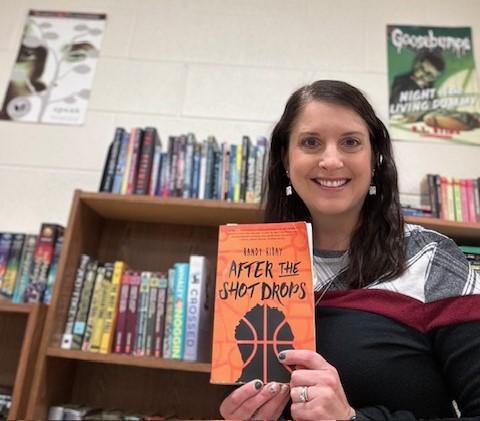
“Ooh! I know this!” Jaxon* cheered as he jumped out of his seat with his hand raised while simultaneously sharing his answer. While I could have criticized him for not waiting to be called on, how could I discourage a student from being so enthusiastic about the book we were reading—a high school boy with reading struggles, no less? Jaxon told the whole class, while still standing in the middle of the room, about how the main character in Randy Ribay’s After the Shot Drops switched to a new school to play basketball without telling his BFF and also started dating the girl his BFF was interested in.
Jaxon’s excitement to continue our read-aloud that day demonstrates that relatable, action-packed books can make a difference in a teen’s life. After the Shot Drops features teen characters, rocky relationships, and basketball. Yet, how does that help someone like Jaxon, a struggling reader, go from hating reading to jumping out of his seat in excitement over a book?
This past August, my co-teacher and I surveyed our sophomore English classes about their reading habits and preferences. Out of 67 responses, 76.6% of students said they either “rarely” or “never” enjoyed reading. 59% claimed they hadn’t enjoyed reading since either middle or elementary school. However, choice could make a difference: 83.6% of the students said they either “sometimes” or “always” prefer to choose the books they read. This has been confirmed by Scholastic Kids and Family Reading Report: 89% of kids ages 6–17 agree that their favorite books are the ones they pick themselves.
As a result, my co-teacher and I have an extensive classroom library—I think we last counted 16 bookshelves of all shapes and sizes—and all students have the opportunity to check out books whenever they desire. I’ve really tried my hardest to curate a collection that contains all genres and formats, and I’ve focused heavily on finding graphic novels, nonfiction, manga, and verse novels these past several years.
These books, it seems, have been very popular among my most reluctant and struggling high school readers. Hey Kiddo by Jarrett J. Krosoczka, New Kid by Jerry Craft, Crank by Ellen Hopkins, and The Crossover by Kwame Alexander have been consistently some of the most checked out. Do some kids ask to read Diary of a Wimpy Kid? Yep. And do I let them? Also yep!
I want my students to see that reading can be enjoyable, and if going back to a time when reading was fun is needed, then I’m all for it. Plus, this can lead to a later conversation where I challenge them to take a step further and read a graphic or verse novel. I also allow my students to read magazines and listen to audiobooks. Sometimes, it just takes baby steps.
Many ask how I grade my students on reading. If I’m being truly honest, I don’t do much. I simply grade them based on whether they are reading or not. I observe them during our three-day-per-week choice reading time, and I have them report what they are reading and what page number they are on when the time is done. When students finish a book, they also get a slip of paper. I then use these papers to create a chain for each class period; the class with the most books read on average per quarter gets a prize. Since most of my students come to me with an aversion to reading, just assigning more work to reading won’t help. Making reading time something that’s fun and low stakes tends to show them that reading doesn’t have to be tedious and stressful.
Another area in which I provide choice is through our class read-aloud. On Tuesdays and Thursdays, we begin class with a read-aloud of a popular YA title. I give a book talk of several options and allow my students to vote on which one they want me to read. Top choices for several years have been the following:
I have read many others as read-alouds before, but these are the titles that tend to get students hooked repeatedly while also generating thoughtful conversations. These read-alouds allow me to introduce books and authors my students may not have discovered on their own, and they allow us to develop a reading community where we can share in the joy of reading together. Again, no major strings are attached. Students will write a brief reflection after I read, sharing any thoughts they have from that day’s pages. These responses are then used as a springboard for our discussion.
In addition to independent reading and read-alouds, I also implement First Chapter Fridays in my reading intervention course to introduce the students to new titles, authors, and formats. My co-teacher and I create monthly bulletin boards to display books and encourage reading, and we display what we are currently reading in the classroom. When a student cannot find something to read they enjoy, I don’t give up. I do some research, contact the school librarian, or even go to the Industrial Arts department to find out what they read.
When all is said and done, it’s about making connections with our struggling and reluctant readers and learning about them as people. When I introduce books that connect to their interests or that they can find compelling and relatable, students are more likely to buy in. Even when student apathy and disinterest toward reading tend to get the best of me, I make sure to remember moments like Jaxon jumping from his seat to talk about a story. This reminds me that there’s hope and that placing the right book in a student’s life at the right time can make a world of difference.
Here is a Titlewave® list of the books loved by my students that I use for read-alouds in my class.
*not his real name
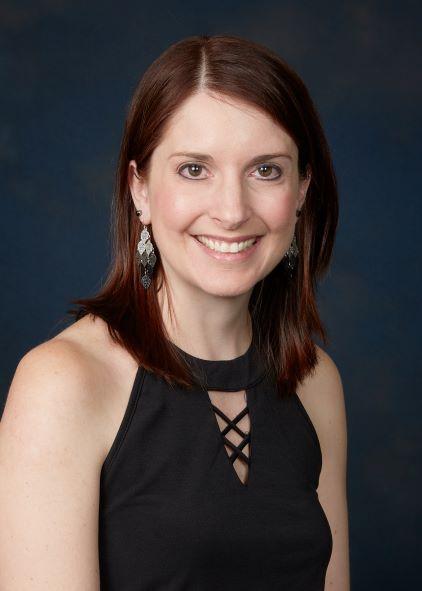
Dr. Katie Hoving
Reading Intervention and ELA Teacher
Hampshire High School, Community Unit School District 300
Dr. Katie Hoving has been a high school teacher for 17 years. She taught special education for 10 years with a focus on teaching reading and English. She earned her master’s degree in literacy from Judson University in 2009. Six years ago, she made the switch to teaching general education ELA, which allowed her to continue teaching kids who struggle, but on a grander scale while still having time for her family and for furthering her education. She completed her reading specialist endorsement in 2018, and she graduated with her doctorate in literacy in May 2022. Her research interests include motivating struggling learners, determining strategies for affective literacy, and keeping up with YA literature trends. Katie developed a framework for motivating readers who struggle, which calls for providing choice, relevance, interest, success, and peer interactions (CRISP) to teens in the classroom.
A Modern Classic: Building the Public Library Partnership for What Comes Next
October 12, 2026
Last month, Emily Henry announced the title of her next novel: Modern Classic, due out in April 2027. As a reader, I can already imagine the holds lists! But the title caught my attention for another reason: it’s a fitting...
Read more
Why Students Stop Reading for Pleasure and What Schools Can Do About It
October 7, 2026
Most children enter school eager to explore stories, characters, and new ideas through books. Yet as students get older, many begin reading less frequently for enjoyment.According to data from the National Assessment of Educational Progress (NAEP), the percentage of 13-year-olds...
Read more
October 2, 2026
Sometimes, a community exceeds every expectation.When Follett Content began planning its 2026 book sales, the goal was ambitious: Raise $15,000 to support United Way of Greater McHenry County’s Dolly Parton’s Imagination Library Program. By the end of the fundraising effort, that...
Read more
Bilingual STEAM Books Your Youngest Learners Will Love
October 2, 2026
National STEAM Day Book GiveawayIn celebration of National STEAM Day, we're excited to partner with Charlesbridge on a special STEAMWORKS giveaway for educators and public librarians. Ten lucky winners will receive a collection of STEAMWORKS picture and board books to...
Read more
Stock Your Shelves with the Best Fall Books for Classrooms and Libraries
October 1, 2026
Enter the FlutterBee Fall Book Giveaway for a chance to win one of three seasonal book bundles curated for young readers – 15 titles selected to generate excitement and increase engagement this fall.
Read more
PreK-2: A Foundational Skills Checklist for Teachers and Administrators
September 30, 2026
The skills that decide whether a student reads on grade level in third grade get built long before third grade. Here’s what to look for across PreK, Kindergarten, and Grades 1-2 – and what it takes to build the classroom...
Read more